
CEN Breakthrough Video Series
Day #8
Emotional Neglect: Lack of Self-Discipline? It might be Self Neglect Instead
If today's video felt like a relief, you're not imagining that.
Many people who grew up with Childhood Emotional Neglect have spent years blaming themselves for things that were never actually failures of discipline.
They were missing care.
Why Self-Neglect Often Looks Like a Discipline Problem
Self-discipline isn't something we're born with.
It's something we learn through structure, guidance, and emotional attention from our parents.
Children learn self-discipline when adults:
- Notice what they need
- Provide structure and limits
- Help them build routines
- Offer guidance, encouragement, and follow-through
In emotionally neglectful homes, two critical ingredients are often missing:
emotional attention and intentional structure.
Without those, children don't learn...
How to stop themselves from doing things they shouldn't.
And how to make themselves do things they should.
So as adults, many people assume the problem is laziness or lack of willpower.
But it's not.
It's missing training.
The Deeper Root of Self-Neglect
There's another layer that's even more important.
When a child's feelings are treated as unimportant, the child often internalizes a painful message: "My feelings don't matter."
And because your feelings are the deepest expression of who you are, that message can quietly turn into: "I don't matter."
That belief is the root of self-neglect.
When you don't feel worthy of care, it becomes hard to:
- Get enough rest
- Eat well
- Exercise
- Take time for enjoyment
- Ask for support
- Invest in your own well-being
Each time you skip caring for yourself, your nervous system hears the same message again:
"You don't matter."
Common Signs of Self-Neglect
Self-neglect can show up in many ways, including:
- Eating poorly or inconsistently
- Not getting enough sleep, exercise, or fresh air
- Over-committing and leaving no time for yourself
- Putting everyone else's needs before your own
- Avoiding feelings with alcohol, substances, or constant distraction
- Delaying or avoiding care you know would help you
None of these mean you lack discipline.
They mean you were never taught to treat yourself as someone worth caring for.
Turning Self-Neglect Into Self-Care
As I shared in the video, change starts with three important shifts:
First, notice your patterns of self-neglect without judging yourself.
Second, understand where they came from... what you didn't have the chance to learn growing up.
And third, take responsibility now, not as blame, but as empowerment.
You are no longer the child who had no choice.
You are the adult who can choose differently, one small act at a time.
Every time you eat well, rest, move your body, or care for yourself in any way, you are sending a message to your deepest self:
"You matter."
Those messages add up.
And over time, they can quietly change how you relate to yourself.
If You'd Like a Safe Way to Go Deeper
Many people ask me: "Now that I see this... what do I do next?"
The most important thing is not to rush.
That's why I published Running on Empty: Overcome Your Childhood Emotional Neglect.
It gives you a private, steady way to:
- Move at your own pace
- Reflect without pressure
- Understand your history without being overwhelmed
For a limited time, you can get the book directly from me for $10.
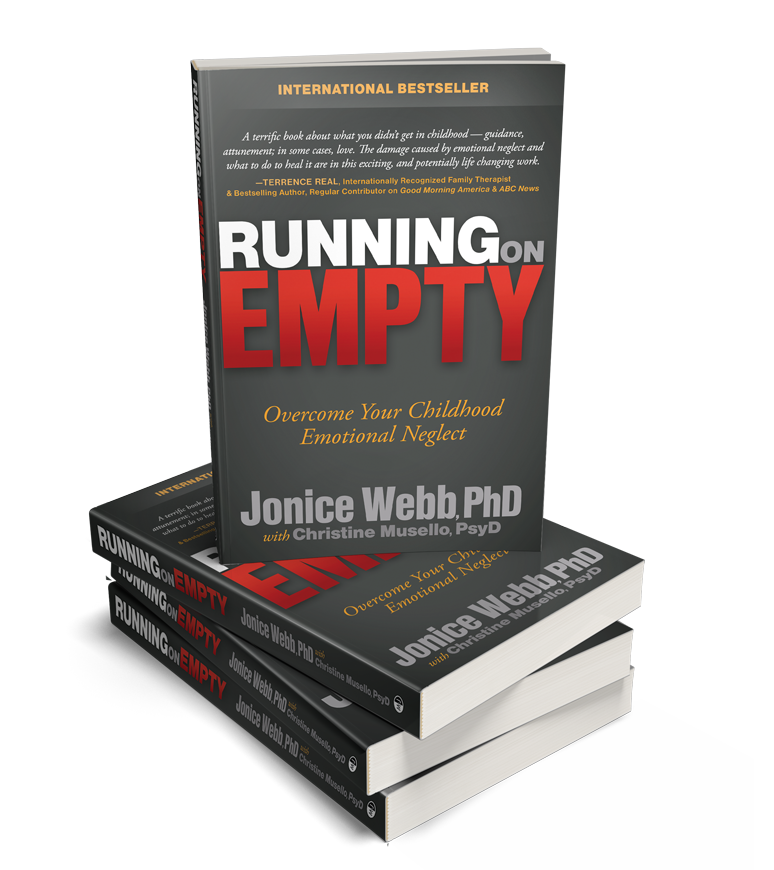
Here's What You'll Receive for Just $10
- Paperback Copy of Running on Empty (U.S. Only) —
Internationally bestselling guide to understanding and healing Childhood Emotional Neglect ($21.95 value) - Free U.S. Shipping ($7.95 value)
- Ebook Version of Running on Empty - Read the book immediately on Kindle, Apple Books, Kobo or Nook! ($19.99 value)
- Free Childhood Emotional Neglect Questionnaire — So you can return to clarity anytime.
- Free Emotion Words Cheat Sheet — To help you identify and name feelings you were never taught to recognize.
- Free Survival Guide for the Emotionally Neglected — Practical guidance for the six life areas CEN affects most ($199 value)
- The opportunity to buy up to 3 of my CEN programs for a fraction of the normal price!
This is not about fixing yourself.
It's about finally understanding yourself... with compassion.
Want a Clear, Steady Way to Go Deeper?
If this video helped you recognize yourself, you may be wondering what comes next.
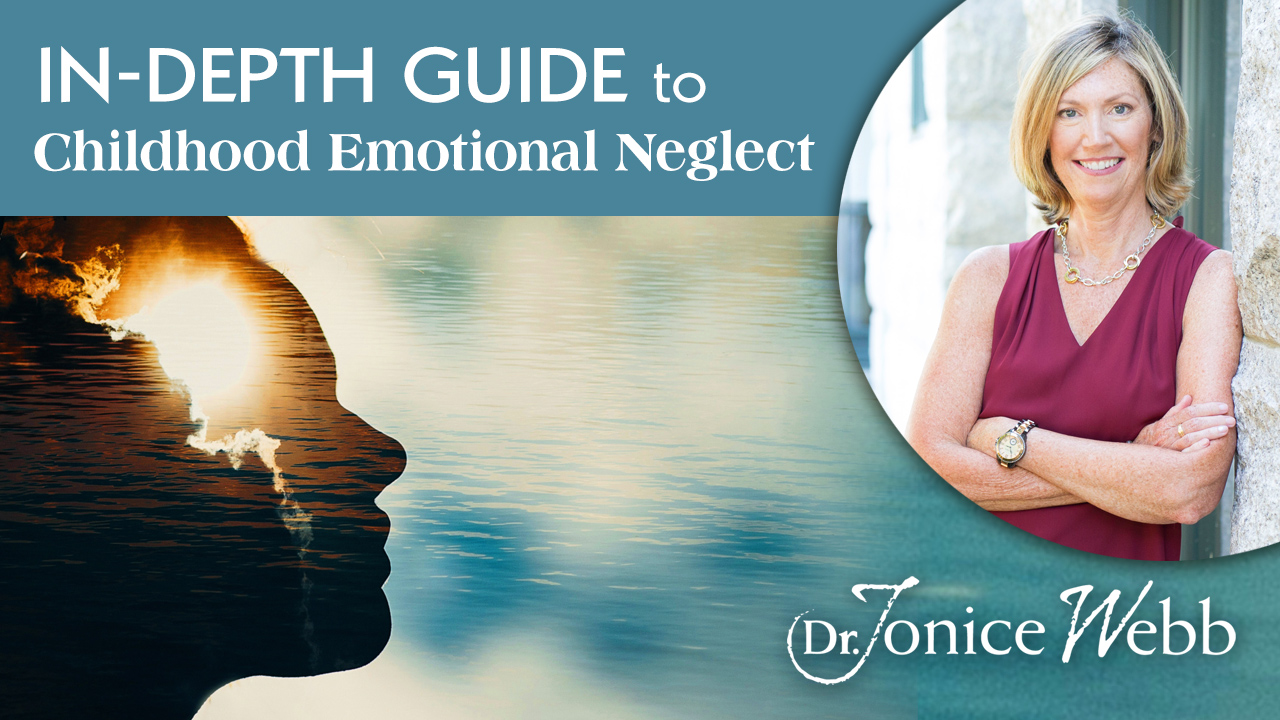
That's exactly why I created the In-Depth Guide to Childhood Emotional Neglect.
This is not a quick fix or a motivational program.
It's a calm, structured explanation of what CEN really is, how it shaped you, and how healing actually happens step-by-step.
Inside the In-Depth Guide to CEN
Across eight in-depth video lessons, you'll learn:
- What Childhood Emotional Neglect actually is and why it's so invisible
- How CEN affects adults emotionally, relationally, and internally
- The different types of emotionally neglectful parents, including well-meaning ones
- Why so many CEN adults feel empty, overly self-reliant, or deeply flawed
- The four stages of healing and why going slowly matters
- How to begin reconnecting with your emotions safely and at your own pace
This guide gives you clarity, language, and structure without pressure to rush or "fix" anything.
Many people start with the book and then use the guide to understand what they're experiencing in a clearer, more grounded way.
Special Access During the CEN Breakthrough Series
Normally, the In-Depth Guide to Childhood Emotional Neglect is $299.
Because you're watching this series, you can get it now for just $49.
This offer is only available during the CEN Breakthrough Series.
One Important Thing to Know
You are always in control of how far and how fast you go.
This guide is here to help you understand yourself... not to overwhelm you.
What's Coming Next...
In the next training, I'll talk about:
How Childhood Emotional Neglect affects love and romantic relationships...
and why connection can feel confusing, distant, or fragile even when you care deeply.
©2026 Dr. Jonice Webb. All rights reserved.